
The Society’s Distinguished Lecturers for 2026–27 have been selected. They are Prof. Karen Hudson-Edwards, University of Exeter, UK and Prof. Julian Menuge, University College Dubin, Ireland
If you would like to request a Distinguished Lecture at your organization/university, please complete the attached form and return it to the Society’s Executive Director by 30th October 2026

 .
.
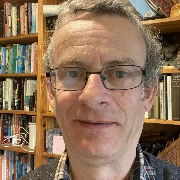
(left) Karen Hudson-Edwards, University of Exeter, UK
(right) Prof. Julian Menuge, University College Dublin, Ireland
Karen Hudson-Edwards
Lecture A – The Story of Mine Waste Minerals: From Agricola to the Anthropocene
The German Renaissance mineralogist and metallurgist Georgius Agricola was the first person to describe and document minerals growing on wastes generated by mining. Such minerals can control the uptake and release of potentially hazardous contaminants. Agricola’s work demonstrated the mechanisms of formation and dissolution of some of these phases and opened the discipline for generations of scientists in the centuries to come.
In this presentation I will tell the story of mine waste mineral exploration, documentation and exploitation. Starting with Agricola, I will move from the 16th century through the Anthropocene to talk about the people, places and techniques who and which were instrumental in developing our current understanding of these important minerals.
Lecture B – The Role of Mineralogy in Managing and Valorising Mine Tailings
Mine tailings are fine-grained wastes generated during the extraction of valuable components from ores. Generated at a rate of c. 13 billion tonnes per annum, they are one of the world’s largest wastes streams. Tailings are often stored in managed ‘tailings storage facilities’ but are also discharged deliberately or accidentally to rivers or oceans, or suspended as dusts. Because tailings can contain high concentrations of potentially toxic or radioactive elements, they also pose hazards to the health of ecosystems and humans.
Growing interest in sustainable mining and in the need for critical minerals to power the ‘green transition’ is causing tailings to be considered as potential resources. Success in the exploitation of tailings depends on many factors, including having a good understanding of their heterogeneity, conducting economic modelling to generate investor confidence, and developing collaborations with key stakeholders to ensure sound management and social acceptance.
In this talk I will use global examples to outline how mineralogical data are vital for managing the safety and environmental impacts of tailings, and for underpinning the valorising tailings for their gold, critical metal or other valuable components.
Julian Menuge
Lecture C – How do lithium pegmatites form?
Lithium pegmatites occur as small intrusions into orogenic belts, usually emplaced into active shear zones in the later stages of orogeny. They are widely distributed around the world and range in age from ~2.9 Ga to Cenozoic. They are texturally complex and mineralogically diverse, reflecting the range of magmatic, hydrothermal and tectonic processes involved in their crystallization.
Fifteen years ago, lithium pegmatites were a little regarded curiosity and the preserve of a small global community of researchers. They were generally accepted to be extreme differentiates of granitic magmas, modified to varying extents by late stage exsolved magmatic fluids which are partly expelled into host rock to create metasomatic halos. Since then, industrial demand for lithium has led to an explosion in research activity because of the economic value of pegmatitic spodumene, petalite and other lithium minerals. Several aspects of lithium pegmatite petrogenesis are currently the subject of debate. These include their sources, the extent to which fluids rather than magmas have contributed both to their formation and to their high lithium concentrations, and the relationships between metasomatic halo development and pegmatite crystallization. I will discuss the evidence behind these debates, focussing on mineral textures, whole-rock and mineral chemistry and element partitioning, and point the way to potentially fruitful further research.
Lecture D – Making and finding economic lithium pegmatites
The demand for lithium, an essential constituent of most electric vehicle batteries, has grown in recent years and is likely to accelerate for decades to come. Lithium pegmatites, in which the ore minerals are usually spodumene or petalite, are currently the source of more than half of the world’s lithium. Like all ore deposits, the formation of lithium pegmatite orebodies involves a rare conjunction of materials and processes. I will review the processes that are involved in the formation of lithium pegmatites from a mineral systems perspective, including source rocks, energy for their formation, conduits, enrichment processes, traps and preservational factors, pointing out some of the many knowledge gaps and focussing on factors that may be key to produce economic rather than subeconomic lithium pegmatites.
Mineral exploration for lithium pegmatites has proved very challenging because of their relatively small size and their lack of geophysical contrast to many pegmatite host rocks. Other than at mines, relatively few buried pegmatites have been discovered, even where they are only covered by soil or glacial till. I will go on to discuss the relative merits of lithium pegmatite exploration methods, drawing on the results of the EU Horizons GREENPEG project and other recent research, including remote sensing, geophysical, geochemical and machine learning methods.