
With the assistance of colleagues at Cambridge University Press, we have established an area for ‘Collections‘ for Mineralogical Magazine. These are virtual collections of papers.
Collections:
Foundations in Mineralogy and Crystallography
Feel free to suggest other collections (helen@minersoc.org)
………………………………………………………………………………………………………………………….
Special collections
NEW: Frank Hawthorne tribute – crystal chemistry and mineral sturctures
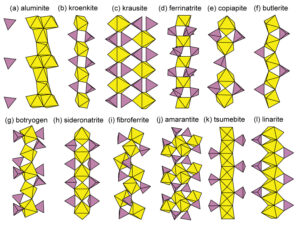 Frank Hawthorne turned 80 this year, and it is difficult to overstate the impact he has had on modern mineralogy. Born in Bristol in 1946 and educated at Imperial College London before moving to Canada and doing his Ph.D. at McMaster University, Hamilton, Frank spent most of his career at the University of Manitoba, where his work reshaped how mineralogists think about crystal structures. Through his pioneering development of bond-topological approaches and his landmark studies of amphiboles and complex oxysalt minerals, he provided conceptual frameworks that are now foundational to mineral crystal chemistry. Generations of mineralogists have learned structure, bonding, and classification through Frank’s papers, and many of us have been influenced directly by his remarkable clarity of thought, intellectual generosity, and infectious enthusiasm for minerals.

Frank’s scientific achievements are extraordinary. His more than five decades of research have produced hundreds of influential publications and helped define the modern language of structural mineralogy. His work has been recognized by many of the highest honours in the field, including the Roebling Medal of the Mineralogical Society of America, the Schlumberger Medal of the Mineralogical Society of Great Britain and Ireland, and the Logan Medal of the Geological Association of Canada. Yet for many colleagues and former students, Frank’s greatest legacy lies not only in the papers themselves, but in the ideas they sparked and the people they inspired.
To celebrate Frank’s 80th birthday and his profound influence on mineralogy, Mineralogical Magazine will host a Special Issue dedicated to crystal chemistry, mineral structures, and related topics that reflect the breadth of his scientific interests. Colleagues, collaborators, and former students are warmly invited to contribute papers in honour of Frank’s remarkable career. Submissions spanning structural mineralogy, crystal chemistry, new minerals, and related areas are especially welcome.
We hope this collection will serve both as a tribute to Frank and as a reflection of the vibrant scientific fields he helped shape.
Guest Editors – Elena Sokolova, Fernando Cámara and Vlad Gurzhiy
Principal Editor – Stuart Mills
………………………………………………………………………………………………………………………………………………………….
NEW: 150 Years of the Mineralogical Society of the UK and Ireland
Alongside our 150th anniversary meeting https://minsoc-150.org/ , Mineralogical Magazine will publish a special anniversary collection of papers reflecting on the Society’s history and exploring exciting new directions in mineralogy, crystallography, petrology, and related fields. This is a unique opportunity to showcase research, perspectives, or reviews that celebrate both the achievements of our field and its future frontiers. We encourage you to consider submitting a contribution and sharing this call with interested colleagues. Some papers have already been submitted and will be published by the time of the conference.
Our deadline for contributions to the collection is 31 August 2026.
Submissions are now open in Editorial Manager.
Accepted papers will appear here: https://www.cambridge.org/core/journals/mineralogical-magazine/collections
…………………………………………………………………………………………………………………………………………………………………………
CLOSED
PUBLISHED APRIL 2026
Mantle heterogeneity and evolution: The Role of Fluids and Melts – special issue arrsising from EMC
Mantle Heterogeneity and Evolution: The Role of Fluids and Melts.
This special issue aims to provide a platform for researchers to share their latest findings and insights on the topics addressed at the European Mineralogical Conference EMC 2024 (https://emc-2024.org/) under the theme : “Mantle mineralogy and mantle melting (petrology, geochemistry and mineral physics)” [sessions 26-28].
Don’t hesitate to contact us if you have any questions.
Caterina Melai and Michele Rinaldi
melaic@tcd.ie; rinaldim@tcd.ie
Guest Editors, Mineralogical Magazine
……………………………………………………………………………………………………………………………………………………………………………………………………………………………..
PUBLISHED DECEMBER 2025
Ed Grew at 80 – The Testimony of the Minerals –
Throughout his remarkable career, Ed Grew has deciphered and shared the deep-time stories locked in rocks and minerals. In works of meticulous scholarship and deep insight, Ed has revealed the rich context and varied processes of mineral formation in Precambrian complexes in Greenland, the Aldan shield, southern India and Antarctica, as well as younger metamorphic suites in Tajikistan and western Europe. He is the world’s authority on the minerals of lithium, beryllium, and boron, including pioneering studies on their mineral evolution and ecology. His work on the classification of minerals in the garnet and sapphirine supergroups are classic contributions. In short, Ed Grew’s influence on the mineralogical community has been lasting and profound from Greenland to the Antarctic, from metamorphics of Tajikistan to his beloved Maine pegmatites. He is the world’s authority on the minerals of lithium, beryllium, and boron, including pioneering studies on their mineral evolution and ecology. His work on metamorphic minerals, notably the garnet group and sapphirine-surinamite groups, are classic contributions. In short, Ed Grew’s influence on the mineralogical community has been lasting and profound.
This special issue in honour of Ed Grew’s long and distinguished career welcomes a wide range of contributions that touch on the varied aspects of his research, including (but not limited to) complex pegmatites, the geology and mineralogy of Antarctica, metamorphic minerals, the minerals of rare elements, mineral evolution, and varied aspects of petrologic mineralogy.
Guest Editors
Bob Martin
Gerhard Franz
Jesse Walters
Barb Dutrow
……………………………………………………………………………………………………………………………………………………………………………………………………………………………….
PUBLISHED DECEMBER 2024
Mineralogy, petrology and geochemistry of pegmatites: Alessandro Guastoni memorial issue –
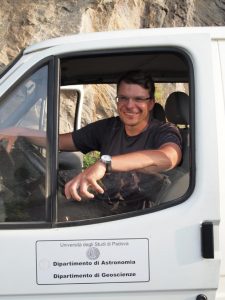
This special issue is dedicated to Dr. Alessandro Guastoni, curator of the Museum of Mineralogy at University of Padova during the last 16 years. Sadly, Alessandro left us in December 2022 at the age of 56 due to an accident during an exploratory research trip for new mineral species. Alessandro was an expert in pegmatite mineralogy, his PhD thesis focused on LCT and NYF pegmatitic minerals in the Central Italian Alps.
Alessandro published more than 50 papers in peer-reviewed international journals (and more than 200 articles in Italian and international non-peer review journals and books), he is the lead author of “Tutto Mineralogia”, a mineralogical reference book for students and mineral collectors and he was the director of the “Rivista Mineralogical Italiana” journal. Alessandro was a bona fide mineral enthusiast and was extremely passionate about all aspects of this work, including research, teaching, and science dissemination. He was involved in hundreds of national and international collaborations and assumed many roles in the national scientific community in which he gained a reputation for helping students, colleagues, and friends no matter the circumstances.
Recently, Alessandro started preparing the mineralogy section for the new Nature and Humankind Museum at the University of Padova, the largest European university museum of its kind. The Museum will open in June 2023 and will include a commemorative mineralogy section entitled “The Alessandro Guastoni Mineralogical section”.
Guest Editors
Fabrizio Nestola, Department of Geosciences, University of Padova
Simone Molinari, Natural and Humankind Museum, University of Padova